
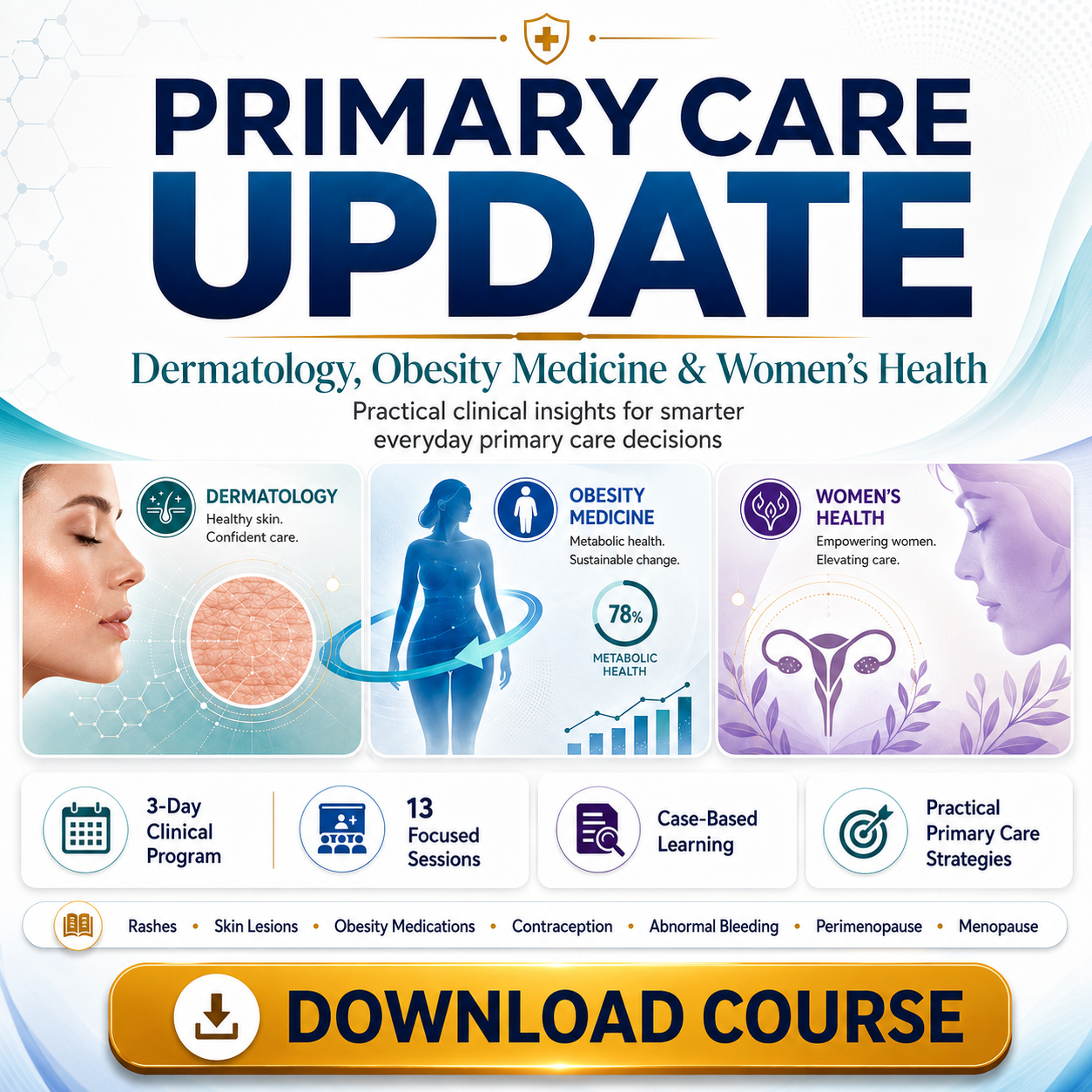
MCE Primary Care Update: Dermatology, Obesity Medicine & Women’s Health
Dermatology · Obesity Medicine · Contraception · Abnormal Bleeding · Perimenopause · Menopause
A practical multidisciplinary course designed for primary care clinicians who want current, evidence-informed approaches to common skin findings, obesity treatment, women’s health concerns, and everyday office-based decision-making.
Three high-frequency primary care areas in one focused course
Primary care visits often require rapid decisions across multiple specialties. A single clinic day may include an unfamiliar rash, a suspicious lesion, weight-management questions, contraceptive counseling, abnormal uterine bleeding, or menopausal symptoms.
This course brings together practical updates in dermatology, obesity medicine, and women’s health through focused lectures, case discussions, and clinical management frameworks.
The goal is to help clinicians organize differential diagnoses, recognize important red flags, review current treatment strategies, and make more confident referral and management decisions.
- Recognize common rashes, lesions, and clinically important dermatologic patterns
- Review practical biopsy decisions and avoid common dermatology pitfalls
- Understand metabolic adaptation and modern obesity-management medications
- Strengthen contraception counseling and abnormal bleeding evaluation
- Review perimenopause and evidence-informed non-hormonal menopause care
What You Can Learn
Use the course to strengthen practical diagnostic, counseling, treatment, and referral decisions in everyday primary care.
The program focuses on common clinical situations that often require efficient decision-making during a busy office visit.
Recognize common skin findings
Use morphology, configuration, and distribution to narrow the differential diagnosis for common rashes and lesions.
Make better biopsy decisions
Review benign versus malignant features and choose among shave, punch, and excisional biopsy techniques.
Modernize obesity management
Connect counseling, metabolic adaptation, nutrition, exercise, and obesity-management medications in a comprehensive treatment plan.
Strengthen women’s health care
Review contraception, abnormal uterine bleeding, perimenopause, and non-hormonal options for menopausal symptoms.
Complete 3-Day Curriculum
Browse every listed session from the July 17–19, 2026 program.
Friday, July 17 — Dermatology & Women’s Health 4 Sessions
Skin findings, biopsy decisions, contraception, and abnormal uterine bleeding.
-
7:30–8:30 AM
Dermatology
Name That Skin Finding
Identify morphologies, configurations, and distributions of skin findings, highlight clinical pearls, and build a differential diagnosis for rashes.
-
8:35–9:35 AM
Dermatology
To Biopsy or Not to Biopsy
Review distinguishing features of benign versus malignant lesions, common skin cancers, and selection of shave, punch, and excisional biopsy techniques.
-
9:45–10:45 AM
Women’s Health
Beyond the Pill: Mastering Modern Contraception Counseling
Apply shared decision-making, address side effects and contraindications, and review evidence-based strategies to reduce barriers to contraceptive access.
-
10:50–11:50 AM
Women’s Health
Decoding Abnormal Bleeding: The Primary Care Playbook
Apply a systematic approach to abnormal uterine bleeding using PALM-COEIN, review first-line management, and identify red flags requiring referral or expedited evaluation.
Saturday, July 18 — Obesity Medicine & Menopause 5 Sessions
Weight-loss counseling, metabolic adaptation, obesity medications, perimenopause, and non-hormonal menopause care.
-
7:30–8:00 AM
Obesity Medicine
Overall Approach to Weight Loss in Primary Care
Review the history of obesity and apply motivational interviewing and the 5As framework when counseling patients about weight loss.
-
8:00–8:30 AM
Obesity Medicine
Metabolic Adaptation: A Key to Understanding the Need for Anti-Obesity Medications
Review metabolic adaptation, hunger and satiety hormone changes, and how these concepts influence comprehensive obesity treatment planning.
-
8:35–9:35 AM
Obesity Medicine
Obesity Management Medications: Practical Guidance for Primary Care
Review indications, contraindications, possible side effects, and practical tips for initiating and maintaining weight-management therapies.
-
9:45–10:45 AM
Women’s Health
The Perimenopause Puzzle: Navigating the Transition Before Menopause Hits
Recognize common clinical presentations and hormonal changes, review irregular bleeding, vasomotor symptoms, and mood changes, and identify when further evaluation is warranted.
-
10:50–11:50 AM
Women’s Health
Cooling the Heat: Non-Hormonal Solutions for Menopausal Symptoms That Actually Work
Review pharmacologic and non-pharmacologic options for vasomotor symptoms, sleep disturbance, and mood changes, including realistic expectations and referral indications.
Sunday, July 19 — Weight Management & Dermatology Cases 4 Sessions
Diet, exercise, obesity cases, rash diagnosis, and dermatology pitfalls.
-
7:30–8:30 AM
Obesity Medicine
In-Depth Review of Diet and Exercise for Weight Management in Primary Care
Review nutritional quality and quantity, practical nutrition counseling, the benefits and limitations of exercise, and office-based exercise strategies.
-
8:35–9:35 AM
Obesity Medicine
Case Studies in Obesity Medicine
Apply key concepts to speaker-provided and peer-submitted cases and compare different practice approaches.
-
9:45–10:45 AM
Dermatology
Name That Rash
Develop and apply a systematic approach to constructing a differential diagnosis for common rashes and selecting appropriate management strategies.
-
10:50–11:50 AM
Dermatology
Avoiding Pitfalls in Dermatology
Identify potential dermatology misdiagnoses, avoid incorrect or unnecessary procedures and tests, and improve quality of dermatologic care.
Focused coverage across high-impact primary care topics
Use the course for practical review across dermatology, obesity medicine, and women’s health.
Dermatology
Rashes, lesion recognition, biopsy selection, differential diagnosis, and common clinical pitfalls.
Obesity Medicine
Counseling, metabolic adaptation, obesity medications, nutrition, exercise, and case-based management.
Women’s Health
Contraception, abnormal bleeding, perimenopause, menopause symptoms, and referral considerations.
Learning outcomes and intended audience
Designed for physicians and other healthcare professionals seeking practical clinical updates for primary care.
What You Will Learn
- Build structured differentials for common rashes and skin findings.
- Recognize concerning skin lesions and select appropriate biopsy techniques.
- Apply motivational interviewing and comprehensive obesity-management strategies.
- Review practical use of obesity-management medications, including indications and side effects.
- Improve contraception counseling using shared decision-making.
- Evaluate abnormal uterine bleeding and recognize referral red flags.
- Review perimenopause and evidence-informed non-hormonal menopause treatments.
Who Can Learn From This Course?
The program is intended for clinicians who manage common outpatient concerns in primary care.
Clinical Topics Across the Course
A practical collection spanning diagnosis, counseling, treatment considerations, and referral decisions.
Skin Morphology
Recognize morphology, configuration, and distribution to organize common dermatologic differentials.
Skin Lesions & Biopsy
Review benign versus malignant features and practical biopsy technique selection.
Dermatology Pitfalls
Reduce common misdiagnoses, unnecessary procedures, and avoidable testing.
Weight-Loss Counseling
Apply motivational interviewing, the 5As framework, and practical behavior-change strategies.
Metabolic Adaptation
Understand hunger, satiety, and metabolic changes that influence long-term obesity treatment.
Obesity Medications
Review indications, contraindications, side effects, and practical medication-management considerations.
Nutrition & Exercise
Review evidence-informed dietary counseling and the benefits and limitations of exercise.
Contraception Counseling
Use shared decision-making while addressing preferences, contraindications, and common side effects.
Abnormal Uterine Bleeding
Apply a systematic evaluation and identify patients who need referral or expedited work-up.
Perimenopause
Recognize common presentations, hormonal changes, irregular bleeding, vasomotor symptoms, and mood changes.
Menopause Management
Review non-hormonal options for vasomotor symptoms, sleep disturbances, and mood concerns.
Case-Based Learning
Apply course concepts to realistic obesity and dermatology cases.
Strengthen three essential areas of everyday primary care
Review practical approaches to dermatology, obesity medicine, and women’s health through 13 focused clinical sessions.
Download Course







Reviews
There are no reviews yet.